

The One Where I Overcommit
A secret sketchbook, sharing is caring, what rules and the podcast I think was invented for me

Bit Off More Than I Can Chew
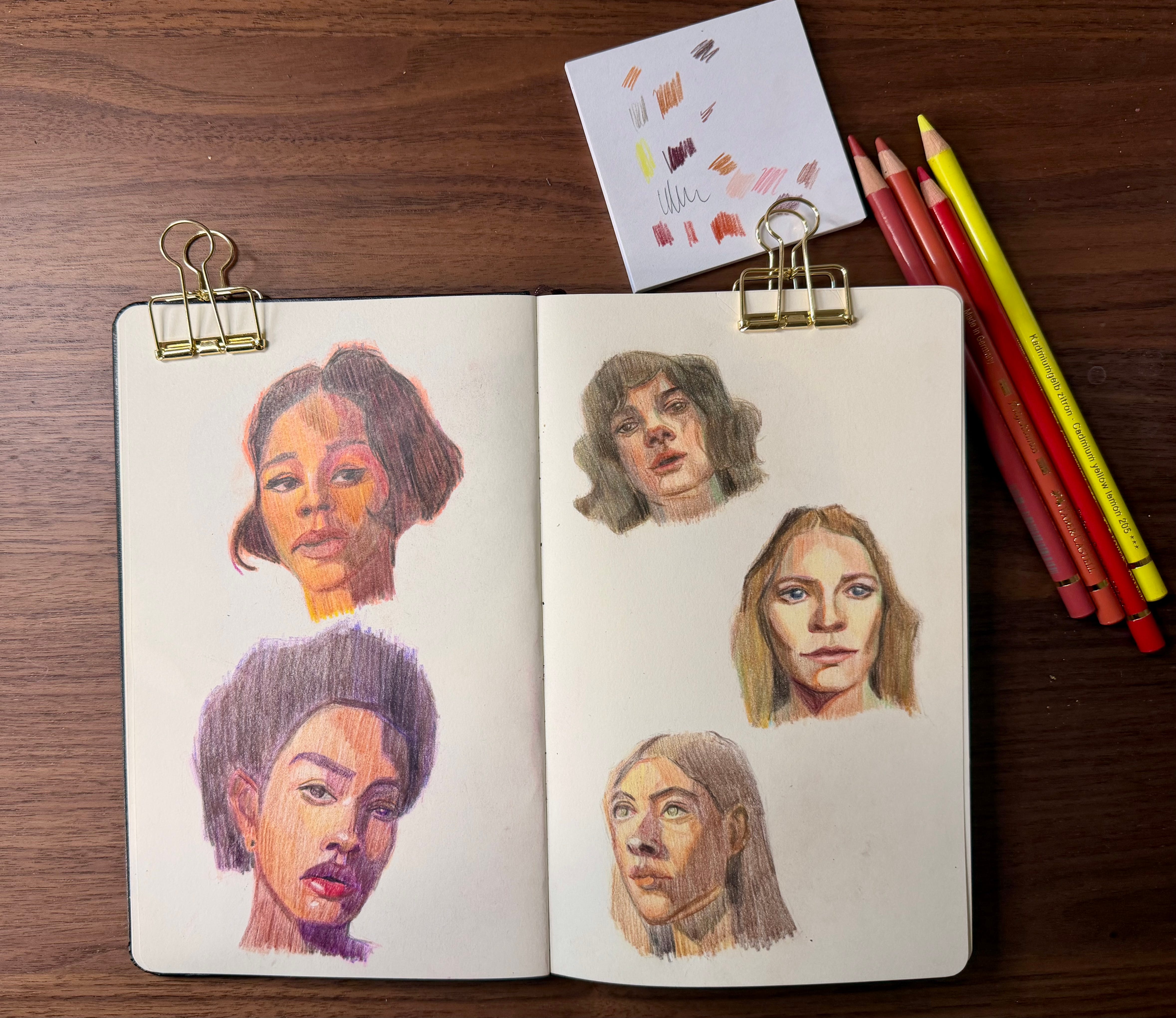
I’m eighteen heads into my 100 Heads Challenge, and somewhere between head 12 and 18, I realized I was grew frustrated. Not because I don’t want to keep going — I do — but because I’m starting to feel the weight of it. One hundred is a big number.
It’s not the first time I’ve done this. I have a habit of stacking my goals until they wobble. It’s part enthusiasm, part denial. I tell myself, “I can totally handle it,” and then two weeks later I’m wondering what I got myself into. Still, I keep doing it. There’s something about that big bite that feels exciting — like potential wrapped in possibility.
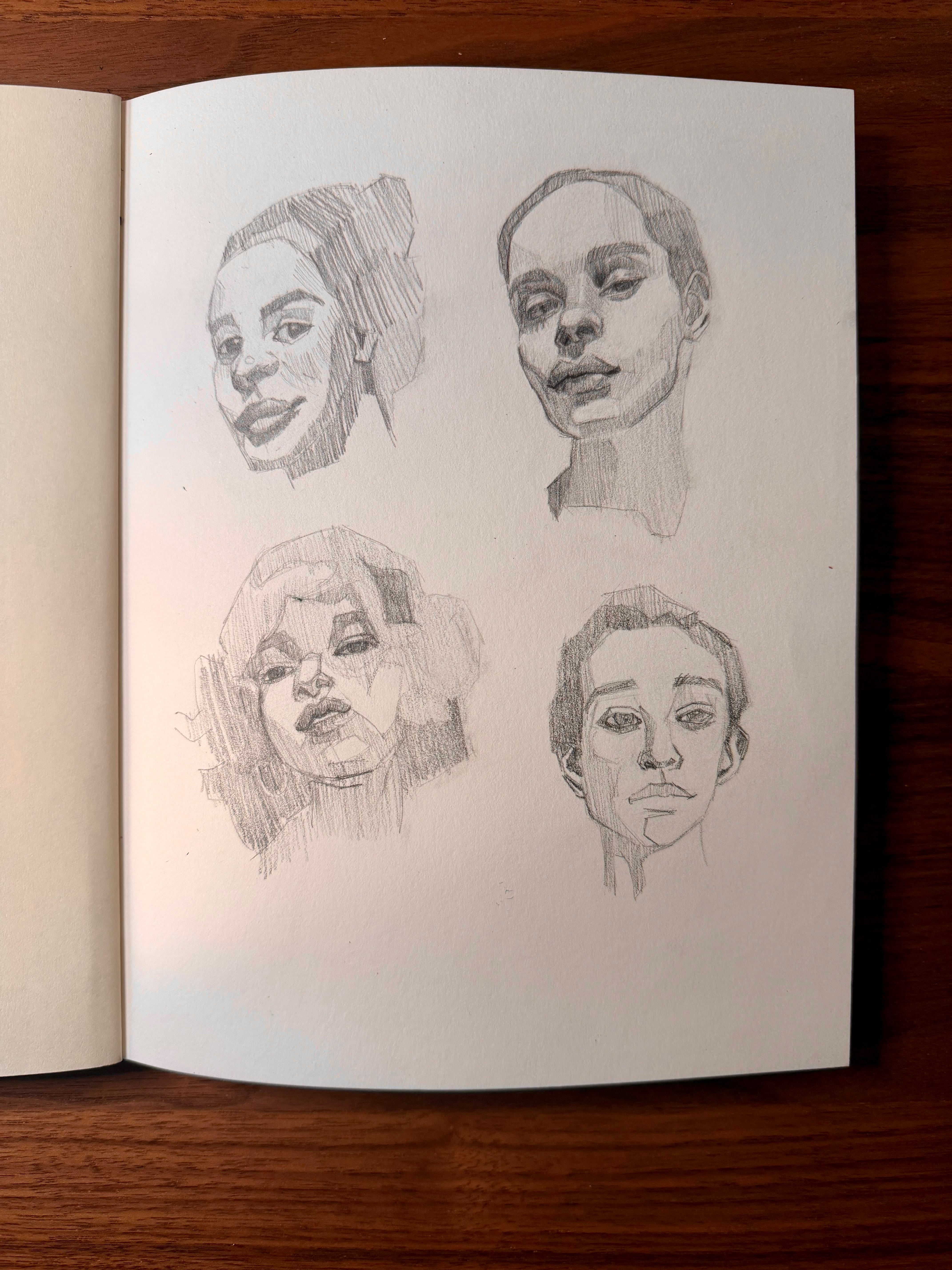
Behind the scenes, I’ve taken a quiet detour and started a secret sketchbook of graphite-only portrait studies. It began with head #15. I was frustrated with how that portrait turned out, so I pulled out another sketchbook to work through it — a tangent that turned into a small obsession. Somewhere in that process, I started to wonder about the toll of sharing on social media.
What We Show (and What We Don’t)
Somewhere in that secret sketchbook detour, I started wondering about what I share — and what I don’t.
I like posting my work. It keeps me accountable and connected. When another artist leaves a comment that says, “same,”it feels like a quiet high five across the internet. It reminds me I’m not alone in this weird, wonderful learning curve.
But there’s a flip side. Sometimes, sharing too soon makes me start editing for other people’s eyes instead of my own. I’ll catch myself thinking about how something will look on a grid instead of whether I actually learned anything from it.
So I’ve been trying to give myself permission to keep a few things just for me. Some drawings are like journal entries — private notes between me and the page. They don’t need to be seen to matter.
I’m realizing I can have both: the connection that comes from sharing and the quiet that comes from privacy. Maybe the trick is knowing which belongs where.
Making My Own Rules
When I first began this art journey, one of the first things I tried to do was teach myself how to draw. That led me to the Bargue Drawing Course. If you’re unfamiliar, it was used in 19th-century art academies (and still is in ateliers today) to train the eye to see accurately and the hand to reproduce what it sees with precision.
The course progresses from simple to complex, guiding students through three stages: copying master drawings to learn proportion, studying plaster casts to understand form and light, and finally drawing from live models to apply those skills. The focus isn’t on creativity but on developing discipline, accuracy, and the ability to truly see.
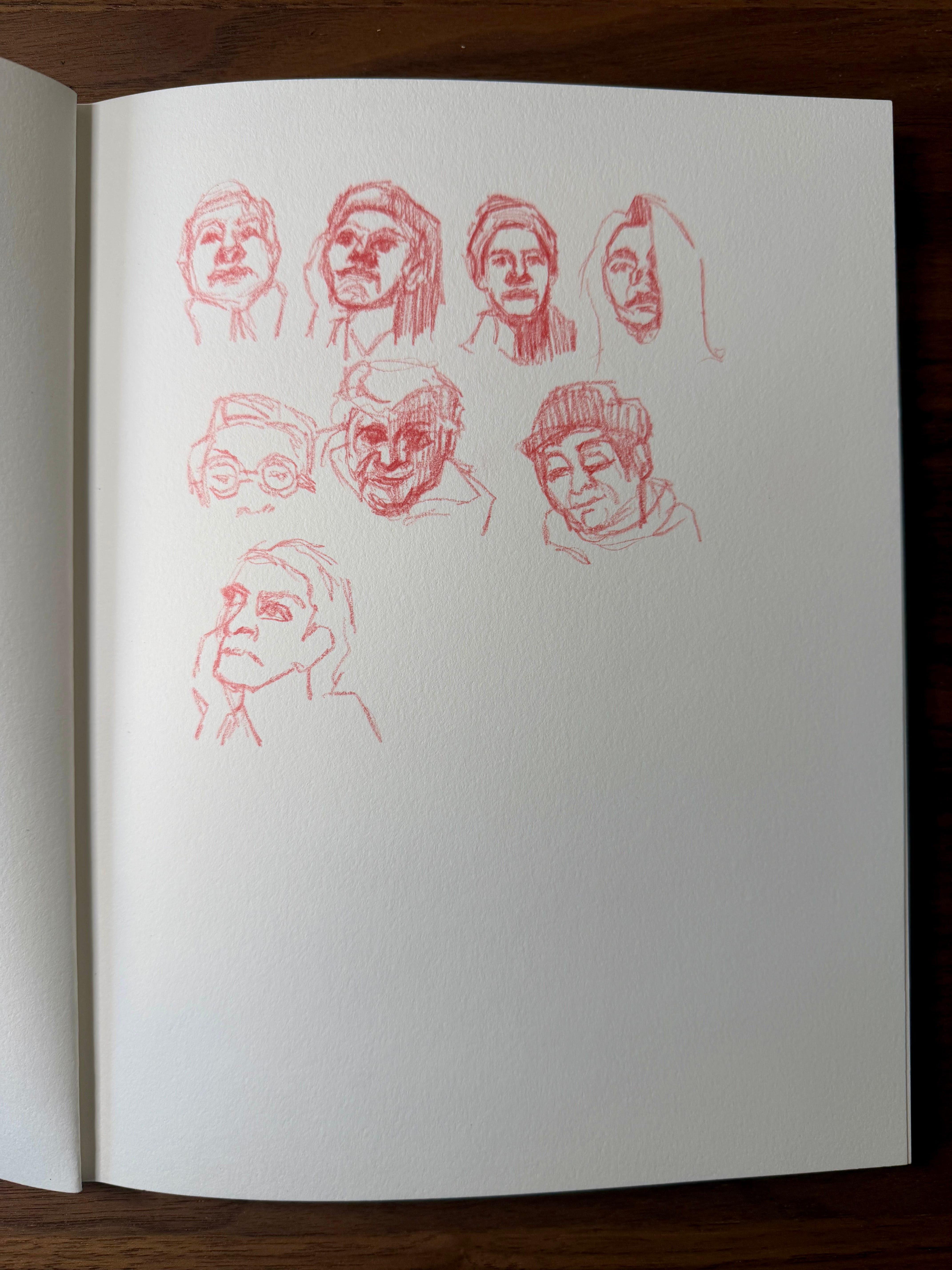
I appreciate the discipline of this approach — but after a couple of days, I realized it’s not for me. Maybe that was a mistake, but part of being self-taught is getting to make my own rules. I’m in charge of the curriculum.
I decided early on that, for me to stay engaged, I need to bring up all my skills at once — drawing, color, composition — the whole messy orchestra. It’s not the most efficient way to learn, and the Bargue students of the world would probably shake their heads at my lack of discipline. But it’s the way that keeps me curious. And for me, curiosity is what keeps the lights on.
All this talk about learning in my own way reminds me of something that’s been quietly shaping my art journey from the start.
🎧 The Soundtrack to My Journey
When I first started learning art back in 2020, I stumbled onto The Learn to Paint Podcast. Hosted by artist Kelly Anne Powers, it explores the process of becoming a better painter — the habits, struggles, and small breakthroughs along the way. It’s equal parts art education and gentle encouragement to keep going. Sometimes when I’m listening, I swear Kelly created this podcast specifically for me. She asks every question I’m already thinking.
This podcast is my classroom, part of my curriculum. I listen while making art, cooking dinner, folding laundry, or driving across town — soaking up conversations with artists who speak honestly and share generously about their process: the doubts, the detours, and the quiet breakthroughs that influence how they work. It makes learning feel human and doable, not mystical or out of reach.
It’s funny how sometimes your own thinking lines up perfectly with something you hear — and suddenly, it gives you a direction forward. In a the most recent episode, The 5 Buckets of Artistic Knowledge with William A. Schneider, the artist talks about how artists are constantly developing five buckets of knowledge: drawing, values, color, edges, and composition. What I took from this episode is you can’t fill one completely before moving to the next; you just keep dipping into each, filling them slowly as you go.
This perfectly describes how I’ve been learning all along. I’m not the type to master one skill before moving on — I like to grow everything together, in my own slightly chaotic way. Listening to that episode felt like permission to keep learning in my own rhythm — to trust that my slower, messier, fill-all-the-buckets-at-once approach might actually be right for me.
Thanks for walking through this messy, wonderful learning process with me.
Here’s to biting off more than we can chew — and figuring it out as we go.
Until next time,
Tait
P.S. If you’re figuring things out one sketch at a time too, I’d love to hear what’s keeping you curious these days.
Hi Tait
The first thing which comes to mind after reading your post today are large canvas paintings I did in the first year of my art journey (2019) self guided before I knew any “rules”. Large fearless and heart lead canvases of self expression. I had fun with them with no inner critique. Painting them with no preconceived notion that I would put them out for sale one day. Four year later I was setting up for a show and the show curator asked if I had any larger pieces. So I put them in the show. And boom!! They sold! Currently I’m taking what I learned from this and moving in that direction of pure enjoyment. At least that’s my plan as I see it today. Thank you for opening up and sharing your thoughts.
Thank you so much for sharing this. I just listened to the 5 buckets podcast with William Schneider. It resonated deeply. The highlights for me were... Connections to practicing an instrument, the 5 buckets as you mentioned, his reminder that we are typically highly skilled in using symbols - using or left brain- yet artists have to rely on the observational side - right brain. He reminds us to break the symbol and don't outline. There's so much more that I'm only beginning to process - color temperature. I love that he was 80 in the interview and felt like he's always on the journey looking at what's beyond the next hill. I think that is why your posts inspire as well.